
Thursday, March 28, 2013
Miami Cold

Friday, January 25, 2013
This Is Why God Invented Snowblowers
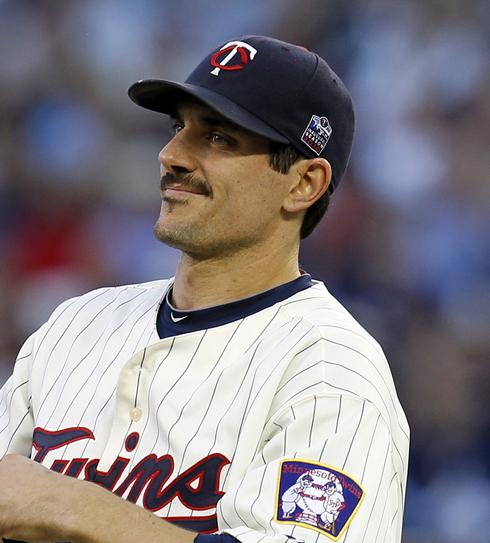
Carl Pavano will likely be out six to eight weeks after rupturing his spleen shoveling snow.
 Not to get too far upon my high horse, but Pavano made eight and a half million dollars last year and over 70 million in his career, per Baseball Reference. (He was still a free agent up until now for this year, however - think teams will be lining up to sign him now.) You think it's possible to hire somebody to shovel the driveway, or buy a snowblower?
Wednesday, January 16, 2013
Seattle Mariners Trade for Michael Morse
The Mariners get Mike Morse from Washington in a three-team trade. Sort of understandable, given the Nats just resigned Adam LaRoche. Although I'm thinking (1) LaRoche is two years older than Morse, and (2) Morse has more upside, but whatever.
A's dump George Kottaras as part of the deal, who would make a good backup catcher for someone.
A's dump George Kottaras as part of the deal, who would make a good backup catcher for someone.
Friday, April 13, 2012
Your 2012 Radio Announcers

Baltimore Orioles – Joe Angel, Fred Manfra
Boston Red Sox – Joe Castiglione, Dave O’Brien
Chicago White Sox – Ed Farmer, Darrin Jackson
Cleveland Indians – Tom Hamilton, Jim Rosenhaus
Detroit Tigers – Dan Dickerson, Jim Price
Kansas City Royals – Denny Matthews, Bob Davis, Steve Physioc
Los Angeles Angels of Anaheim – Terry Smith, Jose Mota
Minnesota Twins – Kris Atteberry, Cory Provus
New York Yankees – John Sterling, Suzyn Waldman
Oakland Athletics – Ken Korach, Vince Cotroneo, Ray Fosse
Seattle Mariners – Rick Rizzs, (rotating) Ron Fairly/Ken Levine/Ken Wilson/Dave Henderson/Dave Valle
Tampa Bay Rays – Andy Freed, Dave Wills
Texas Rangers – Eric Nadel, Steve Busby
Toronto Blue Jays – Jerry Howarth, Mike Wilner, Alan Ashby
Arizona Diamondbacks – Greg Schulte, Tom Candiotti, Jeff Munn
Atlanta Braves – Jim Powell, Don Sutton
Chicago Cubs – Pat Hughes, Keith Moreland
Cincinnati Reds – Marty Brennaman, Jeff Brantley, Jim Kelch
Colorado Rockies – Jack Corrigan, Jerry Schemmel
Houston Astros – Milo Hamilton, Brett Dolan, Dave Raymond
Los Angeles Dodgers – Vin Scully, Charlie Steiner, Rick Monday
Miami Marlins – Dave Van Horne, Glenn Geffner
Milwaukee Brewers – Bob Uecker, Joe Block
New York Mets – Howie Rose, Josh Lewin
Philadelphia Phillies – Chris Wheeler, Larry Andersen
Pittsburgh Pirates – Greg Brown, Tim Neverett, Bob Walk, Steve Blass, John Wehner
San Diego Padres – Jerry Coleman, Ted Leitner, Andy Masur
San Francisco Giants – Jon Miller, Duane Kuiper, Mike Krukow, Dave Flemming
St. Louis Cardinals – John Rooney, Mike Shannon
Washington Nationals – Charlie Slowes, Dave Jageler
Friday, January 13, 2012
Superhits '78, Part 4

Wow, it's been a long time since I posted one of these.
Kiss, “Shout It Out Loud [live version],” #54, February 12, 1978
Yet another song my son can sing along to thanks to its exposure on Scooby-Doo. This was the second time “Shout It Out Loud” had been released as a single; the studio version had peaked at #31 in May of 1976. Kiss was a merchandise bonanza by that point, given “Shout It Out Loud” came from their second double live album, along with six studio albums, in four years – not to mention all the other stuff (including their own comic book). The worm would start to turn within the next two years: the band members’ solo albums were all sales disappointments, a made-for-TV movie was an artistic failure, the disco-sounding “I Was Made for Lovin’ You” turned off the heavy metal fans, and drummer Peter Criss would be phased out of the band (Ace Frehley would follow a few years later).
Prism, “Take Me to the Kaptin,” #59, February 12, 1978
Uninteresting hard rock piece from a Vancouver-based band probably best known for launching the careers of producer Bruce Fairbairn (he co-produced their self-titled first album, from which this is taken), and songwriter Jim Vallance (who plays drums here under the pseudonym Rodney Higgs). This is the second of three Hot 100 hits for the band, which still records and tours today (although I don’t believe any of the original members of the group remain).
Cerrone, “Supernature,” #70, February 12, 1978
Disco concoction from French superstar Mark Cerrone, who was a bestseller in Europe but wasn’t able to achieve the same in the states. I remember picking up my first issue of Billboard magazine at age 15 and seeing a 16-page ad piece on this “best-selling” singer, all the time wondering who on earth he was.
Billy Joel, “Just the Way You Are,” #3, February 19, 1978
The song that really launched Joel into the stratosphere. First hit off The Stranger, his fourth solo album (well, fifth if you count the mastered-at-the-wrong-speed curio Cold Spring Harbor). Actually, I’ve heard that “Movin’ Out (Anthony’s Song)” was the first release and did nothing, only charting after this song hit, but I don’t have any way of verifying that. Written for his (first) ex-wife, Elizabeth.
Santa Esmeralda, “Don’t Let Me Be Misunderstood,” #15, February 19, 1978
And I spent all these years thinking this was one of the first songs by a Hispanic group to hit the Top 20. Not so much; the band was formed in Paris, and lead singer Leroy Gomez, previously in Tavares, was born in Wareham, Massachusetts. Nifty disco concoction, and it tied the Animals’ version when it hit #15 (the song was actually written for Nina Simone).
Foreigner, “Long, Long Way From Home,” #20, February 19, 1978
Third and least of the singles from Foreigner’s self-titled debut, which had already yielded “Cold as Ice” and “Feels Like the First Time.” Left off of the first full Foreigner greatest hits set (I’m not counting their first greatest hits set from 1982, Records, which Atlantic Records concocted to create Christmas product while Foreigner was between albums) for no apparent reason, so some listeners may not know this one as well. It’s still an AOR staple today.
Odyssey, “Native New Yorker,” #21, February 19, 1978
Not really a disco song, contrary to popular opinion; call it sleek soul instead. The group was made up of three sisters from the Virgin Islands, and Filipino singer Tony Reynolds. “Native New Yorker” (which, oddly, didn’t get a whole lot of airplay on the New York Top 40 stations as I recall) would be their only American Top 40 hit.
Con Funk Shun, “Ffun,” #23, February 19, 1978
Long-lived seven-piece funk band from Valejo, California that would place 26 hits on the Billboard R&B charts over three decades, but never quite hit the same heights on the pop charts, scraping into the Top 40 only one more time in 1981 with “Too Tight.” This song was, uh, fun to listen to, but apparently didn’t draw enough of a pop audience to keep the momentum going.
Meco, “Theme From Close Encounters,” #25, February 19, 1978
Thirty-three years after it hit the charts, this song is now greeted by listeners with “This is a joke, right?” Domenico Monardo (a.k.a. Meco) was a jazz trombonist and arranger who decided to go in a different direction after seeing Star Wars four times in its first 24 hours of release. Working with producer/engineer Tony Bongiovi (yes, he’s Jon Bon Jovi’s brother), with whom he’d collaborated on songs like Gloria Gaynor’s “Never Can Say Goodbye,” Meco turned out the #1 “Star Wars” theme a few months later. This one was the followup, and what was similar to his big hit then makes one laugh today (especially the “goodbye… goodbye” part at the end). Still, Meco had nine chart hits between 1977 and 1983, so he must have known something.
Wet Willie, “Street Corner Serenade,” #30, February 19, 1978
Sixth chart hit (but only the second to hit the Top 40, three and a half years after their Top 10 smash “Keep On Smilin’”) for this southern rock group. Fifties nostalgia had already started going away at this point (the continued popularity of Happy Days and Laverne and Shirley notwithstanding), so the doo-wop sound and attitude of this song already must have felt a little passé to AM program directors.
War, “Galaxy,” #39, February 19, 1978
Fourteenth and final chart hit of the decade (including two with Eric Burdon), and unfortunately also their last. A catchy song that just didn’t live up to their biggest hits (“Cisco Kid,” “Why Can’t We Be Friends,” “Low Rider,” etc.). A label change, some confusion over identity, the loss of a couple of members, and a bitter split between the group and their manager (four of them still tour today as the Lowrider Band, but are prohibited from calling themselves War because one other member stuck with that manager and thus retains the name) have put them on the margins, but they deserve mention as a soul/funk band right with Sly & The Family Stone.
Tom Petty & The Heartbreakers, “Breakdown,” February 19, 1978
The very first chart hit for Petty and the Heartbreakers, which didn’t become a hit until over a year after the self-titled LP came out. Still a signature song for Petty today, and the first of many, many hits for the band. Even better in its live version, where the audience sings the first verse. Here's how that works: http://youtu.be/qNxfPAF1frM (unfortunately, this video can't be embedded).
Stillwater, “Mind Bender,” February 19, 1978
This – thing, on the other hand, is justifiably never heard on the radio today. It used the “talk box” guitar effect (best known today on such songs as Peter Frampton’s “Do You Feel Like We Do” and the Eagles’ “Those Shoes”) over the course of an entire song, with the guitar telling the singer of its lineage. Stillwater was a southern rock band from the late ‘70s on Capricorn Records (home of The Allman Brothers Band, The Marshall Tucker Band, and others); headed to obscurity after that label collapsed. They’re not to be confused with the band Stillwater in the Cameron Crowe movie Almost Famous.
Andrea True Connection, “What’s Your Name, What’s Your Number,” February 19, 1978
Yikes, this is actually worse than the last song. Once and future pornographic actress True’s last Hot 100 hit, revealing the limits of her singing ability. For what it’s worth, True’s film work wasn’t a major factor in her music career; most of her publicity didn’t mention it, and in the days before Howard Stern, it wasn’t like she made lots of radio appearances in minimal attire. Fortunately, she seems to have invested her money well, as she’s been retired from both industries since the early 1980s, with no comebacks on the horizon (she turns 68 later this year).
UPDATE: I just rechecked Wikipedia; True died in November 2011 of heart failure.
Ted Nugent, “Home Bound,” #70, February 19, 1978
Follow up to Nugent’s biggest hit, “Cat Scratch Fever” (which actually only hit #30 – Nugent really wasn’t a singles artist), and the second single off the Cat Scratch Fever album. Nugent’s first eight solo albums (after leaving The Amboy Dukes) all went gold or platinum, so he was on a commercial high here. I’m not a Nugent fan (either of his music or his opinions), so my comments would be superfluous.
Pockets, “Come Go With Me,” #84, February 19, 1978
Not much available on this band, who does have a CD in print from this era through Collectables Records (unfortunately, none of the songs are available for legal download). Appears to be an eight-piece soul group from the Baltimore area, and this may have been their only Hot 100 entry.
Pablo Cruise, “Never Had a Love,” #87, February 19, 1978
Third and final single from their A Place in the Sun album, after the breakthrough hit “Whatcha Gonna Do?” and the title track. Fun and sun for this band from southern California, which still occasionally tours today (when founder Cory Lerios can break away from writing TV themes – he’s written the main theme or score for shows ranging from Baywatch to Days of Our Lives).
Eloise Laws, “1,000 Laughs,” #91, February 19, 1978
Dance hit from the R&B singer from Houston (her sister, Debra, was also a somewhat popular singer around this time). Laws had bad label luck – her first label, Invictus, folded not long after her first album came out, and her second, ABC, was in the middle of being sucked into MCA at that point, which meant only the superstar acts got attention. She’s still got a fair amount of material in print, but this song ain’t one of them.
Brick, “Ain’t Gonna’ Hurt Nobody,” #92, February 19, 1978
Funk/jazz band that had a hard time finding the handle outside of their 1977 hit “Dazz” (although the followup, “Dusic,” did climb into the Top 20). It probably didn’t help that their label was Bang Records, which was not terribly successful outside of Neil Diamond, and was in its death throes by the late 1970s. Still in print today, but as far as I can tell the band has gone its separate ways.
Kiss, “Shout It Out Loud [live version],” #54, February 12, 1978
Yet another song my son can sing along to thanks to its exposure on Scooby-Doo. This was the second time “Shout It Out Loud” had been released as a single; the studio version had peaked at #31 in May of 1976. Kiss was a merchandise bonanza by that point, given “Shout It Out Loud” came from their second double live album, along with six studio albums, in four years – not to mention all the other stuff (including their own comic book). The worm would start to turn within the next two years: the band members’ solo albums were all sales disappointments, a made-for-TV movie was an artistic failure, the disco-sounding “I Was Made for Lovin’ You” turned off the heavy metal fans, and drummer Peter Criss would be phased out of the band (Ace Frehley would follow a few years later).
Prism, “Take Me to the Kaptin,” #59, February 12, 1978
Uninteresting hard rock piece from a Vancouver-based band probably best known for launching the careers of producer Bruce Fairbairn (he co-produced their self-titled first album, from which this is taken), and songwriter Jim Vallance (who plays drums here under the pseudonym Rodney Higgs). This is the second of three Hot 100 hits for the band, which still records and tours today (although I don’t believe any of the original members of the group remain).
Cerrone, “Supernature,” #70, February 12, 1978
Disco concoction from French superstar Mark Cerrone, who was a bestseller in Europe but wasn’t able to achieve the same in the states. I remember picking up my first issue of Billboard magazine at age 15 and seeing a 16-page ad piece on this “best-selling” singer, all the time wondering who on earth he was.
Billy Joel, “Just the Way You Are,” #3, February 19, 1978
The song that really launched Joel into the stratosphere. First hit off The Stranger, his fourth solo album (well, fifth if you count the mastered-at-the-wrong-speed curio Cold Spring Harbor). Actually, I’ve heard that “Movin’ Out (Anthony’s Song)” was the first release and did nothing, only charting after this song hit, but I don’t have any way of verifying that. Written for his (first) ex-wife, Elizabeth.
Santa Esmeralda, “Don’t Let Me Be Misunderstood,” #15, February 19, 1978
And I spent all these years thinking this was one of the first songs by a Hispanic group to hit the Top 20. Not so much; the band was formed in Paris, and lead singer Leroy Gomez, previously in Tavares, was born in Wareham, Massachusetts. Nifty disco concoction, and it tied the Animals’ version when it hit #15 (the song was actually written for Nina Simone).
Foreigner, “Long, Long Way From Home,” #20, February 19, 1978
Third and least of the singles from Foreigner’s self-titled debut, which had already yielded “Cold as Ice” and “Feels Like the First Time.” Left off of the first full Foreigner greatest hits set (I’m not counting their first greatest hits set from 1982, Records, which Atlantic Records concocted to create Christmas product while Foreigner was between albums) for no apparent reason, so some listeners may not know this one as well. It’s still an AOR staple today.
Odyssey, “Native New Yorker,” #21, February 19, 1978
Not really a disco song, contrary to popular opinion; call it sleek soul instead. The group was made up of three sisters from the Virgin Islands, and Filipino singer Tony Reynolds. “Native New Yorker” (which, oddly, didn’t get a whole lot of airplay on the New York Top 40 stations as I recall) would be their only American Top 40 hit.
Con Funk Shun, “Ffun,” #23, February 19, 1978
Long-lived seven-piece funk band from Valejo, California that would place 26 hits on the Billboard R&B charts over three decades, but never quite hit the same heights on the pop charts, scraping into the Top 40 only one more time in 1981 with “Too Tight.” This song was, uh, fun to listen to, but apparently didn’t draw enough of a pop audience to keep the momentum going.
Meco, “Theme From Close Encounters,” #25, February 19, 1978
Thirty-three years after it hit the charts, this song is now greeted by listeners with “This is a joke, right?” Domenico Monardo (a.k.a. Meco) was a jazz trombonist and arranger who decided to go in a different direction after seeing Star Wars four times in its first 24 hours of release. Working with producer/engineer Tony Bongiovi (yes, he’s Jon Bon Jovi’s brother), with whom he’d collaborated on songs like Gloria Gaynor’s “Never Can Say Goodbye,” Meco turned out the #1 “Star Wars” theme a few months later. This one was the followup, and what was similar to his big hit then makes one laugh today (especially the “goodbye… goodbye” part at the end). Still, Meco had nine chart hits between 1977 and 1983, so he must have known something.
Wet Willie, “Street Corner Serenade,” #30, February 19, 1978
Sixth chart hit (but only the second to hit the Top 40, three and a half years after their Top 10 smash “Keep On Smilin’”) for this southern rock group. Fifties nostalgia had already started going away at this point (the continued popularity of Happy Days and Laverne and Shirley notwithstanding), so the doo-wop sound and attitude of this song already must have felt a little passé to AM program directors.
War, “Galaxy,” #39, February 19, 1978
Fourteenth and final chart hit of the decade (including two with Eric Burdon), and unfortunately also their last. A catchy song that just didn’t live up to their biggest hits (“Cisco Kid,” “Why Can’t We Be Friends,” “Low Rider,” etc.). A label change, some confusion over identity, the loss of a couple of members, and a bitter split between the group and their manager (four of them still tour today as the Lowrider Band, but are prohibited from calling themselves War because one other member stuck with that manager and thus retains the name) have put them on the margins, but they deserve mention as a soul/funk band right with Sly & The Family Stone.
Tom Petty & The Heartbreakers, “Breakdown,” February 19, 1978
The very first chart hit for Petty and the Heartbreakers, which didn’t become a hit until over a year after the self-titled LP came out. Still a signature song for Petty today, and the first of many, many hits for the band. Even better in its live version, where the audience sings the first verse. Here's how that works: http://youtu.be/qNxfPAF1frM (unfortunately, this video can't be embedded).
Stillwater, “Mind Bender,” February 19, 1978
This – thing, on the other hand, is justifiably never heard on the radio today. It used the “talk box” guitar effect (best known today on such songs as Peter Frampton’s “Do You Feel Like We Do” and the Eagles’ “Those Shoes”) over the course of an entire song, with the guitar telling the singer of its lineage. Stillwater was a southern rock band from the late ‘70s on Capricorn Records (home of The Allman Brothers Band, The Marshall Tucker Band, and others); headed to obscurity after that label collapsed. They’re not to be confused with the band Stillwater in the Cameron Crowe movie Almost Famous.
Andrea True Connection, “What’s Your Name, What’s Your Number,” February 19, 1978
Yikes, this is actually worse than the last song. Once and future pornographic actress True’s last Hot 100 hit, revealing the limits of her singing ability. For what it’s worth, True’s film work wasn’t a major factor in her music career; most of her publicity didn’t mention it, and in the days before Howard Stern, it wasn’t like she made lots of radio appearances in minimal attire. Fortunately, she seems to have invested her money well, as she’s been retired from both industries since the early 1980s, with no comebacks on the horizon (she turns 68 later this year).
UPDATE: I just rechecked Wikipedia; True died in November 2011 of heart failure.
Ted Nugent, “Home Bound,” #70, February 19, 1978
Follow up to Nugent’s biggest hit, “Cat Scratch Fever” (which actually only hit #30 – Nugent really wasn’t a singles artist), and the second single off the Cat Scratch Fever album. Nugent’s first eight solo albums (after leaving The Amboy Dukes) all went gold or platinum, so he was on a commercial high here. I’m not a Nugent fan (either of his music or his opinions), so my comments would be superfluous.
Pockets, “Come Go With Me,” #84, February 19, 1978
Not much available on this band, who does have a CD in print from this era through Collectables Records (unfortunately, none of the songs are available for legal download). Appears to be an eight-piece soul group from the Baltimore area, and this may have been their only Hot 100 entry.
Pablo Cruise, “Never Had a Love,” #87, February 19, 1978
Third and final single from their A Place in the Sun album, after the breakthrough hit “Whatcha Gonna Do?” and the title track. Fun and sun for this band from southern California, which still occasionally tours today (when founder Cory Lerios can break away from writing TV themes – he’s written the main theme or score for shows ranging from Baywatch to Days of Our Lives).
Eloise Laws, “1,000 Laughs,” #91, February 19, 1978
Dance hit from the R&B singer from Houston (her sister, Debra, was also a somewhat popular singer around this time). Laws had bad label luck – her first label, Invictus, folded not long after her first album came out, and her second, ABC, was in the middle of being sucked into MCA at that point, which meant only the superstar acts got attention. She’s still got a fair amount of material in print, but this song ain’t one of them.
Brick, “Ain’t Gonna’ Hurt Nobody,” #92, February 19, 1978
Funk/jazz band that had a hard time finding the handle outside of their 1977 hit “Dazz” (although the followup, “Dusic,” did climb into the Top 20). It probably didn’t help that their label was Bang Records, which was not terribly successful outside of Neil Diamond, and was in its death throes by the late 1970s. Still in print today, but as far as I can tell the band has gone its separate ways.
Thursday, December 22, 2011
19 Days of Football (Sorry I Missed the First Five!)
Thursday, December 22
8:00 PM – Maaco Bowl: Arizona State (6-6) vs. Boise State (11-1), ESPN
8:20 PM – Houston at Indianapolis, NFL Network
Saturday, December 24
Fox has the NFL doubleheader. Check the506.com for the games airing in your area.
1:00 PM – New York Giants at New York Jets, Fox
1:00 PM – Cleveland at Baltimore, CBS
1:00 PM – Denver at Buffalo, CBS
1:00 PM – Tampa Bay at Carolina, Fox
1:00 PM – Oakland at Kansas City, CBS
1:00 PM – Arizona at Cincinnati, Fox
1:00 PM – Miami at New England, CBS
1:00 PM – St. Louis at Pittsburgh, Fox
1:00 PM – Jacksonville at Tennessee, CBS
1:00 PM – Minnesota at Washington, Fox
4:05 PM – San Diego at Detroit, CBS
4:15 PM – Philadelphia at Dallas, Fox
4:15 PM – San Francisco at Seattle, Fox
8:00 PM – Hawaii Bowl: Nevada (7-5) vs. Southern Mississippi (11-2), ESPN
Sunday, December 25
8:20 PM – Green Bay at Chicago, NBC
Monday, December 26
5:00 PM – Independence Bowl: Missouri (7-5) vs. North Carolina (7-5), ESPN2
8:30 PM – Atlanta at New Orleans, ESPN
Tuesday, December 27
4:30 PM – Little Caesars Bowl: Western Michigan (7-5) vs. Purdue (6-6), ESPN
8:00 PM – Belk Bowl: Louisville (7-5) vs. North Carolina State (7-5), ESPN
Wednesday, December 28
4:30 PM – Military Bowl: Toledo (8-4) vs. Air Force (7-5), ESPN
8:00 PM – Holiday Bowl: California (7-5) vs. Texas (7-5), ESPN
Thursday, December 29
5:30 PM – Champs Sports Bowl: Florida State (8-4) vs. Notre Dame (8-4), ESPN
9:00 PM – Alamo Bowl: Washington (7-5) vs. Baylor (9-3), ESPN
Friday, December 30
12:00 Noon – Armed Forces Bowl: BYU (9-3) vs. Tulsa (8-4), ESPN
3:20 PM – Pinstripe Bowl: Rutgers (8-4) vs. Iowa State (6-6), ESPN
6:40 PM – Music City Bowl: Mississippi State (6-6) vs. Wake Forest (6-6), ESPN
10:00 PM – Insight Bowl: Iowa (7-5) vs. Oklahoma (9-3), ESPN
Saturday, December 31
12 Noon – Car Care Bowl: Texas A&M (6-6) vs. Northwestern (6-6), ESPN
2:00 PM – Sun Bowl: Georgia Tech (8-4) vs. Utah (7-5), CBS
3:30 PM – Fight Hunger Bowl: Illinois (6-6) vs. UCLA (6-7), ESPN
3:30 PM – Liberty Bowl: Cincinnati (9-3) vs. Vanderbilt (6-6), ABC
7:30 PM – Chick-fil-A Bowl: Virginia (8-4) vs. Auburn (7-5), ESPN
Sunday, January 1
CBS has the doubleheader. Check the506.com for games airing in your area.
1:00 PM – New York Jets at Miami, CBS
1:00 PM – Chicago at Minnesota, Fox
1:00 PM – Dallas at New York Giants, Fox
1:00 PM – Tampa Bay at Atlanta, Fox
1:00 PM – Baltimore at Cincinnati, CBS
1:00 PM – San Francisco at St. Louis, Fox
1:00 PM – Washington at Philadelphia, Fox
1:00 PM – Pittsburgh at Cleveland, CBS
1:00 PM – Detroit at Green Bay, Fox
1:00 PM – Tennessee at Houston, CBS
1:00 PM – Indianapolis at Jacksonville, CBS
1:00 PM – Buffalo at New England, CBS
1:00 PM – Carolina at New Orleans, Fox
4:15 PM – Seattle at Arizona, Fox
4:15 PM – Kansas City at Denver, CBS
4:15 PM – San Diego at Oakland, CBS
Monday, January 2
12:00 PM – Ticket City Bowl, Houston (12-1) vs. Penn State (9-3), ESPNU
1:00 PM – Gator Bowl, Ohio State (6-6) vs. Florida (6-6), ESPN2
1:00 PM – Outback Bowl, Michigan State (10-3) vs. Georgia (10-3), ABC
1:00 PM – Capital One Bowl, Nebraska (9-3) vs. South Carolina (10-2), ESPN
5:00 PM – Rose Bowl, Wisconsin (11-2) vs. Oregon (11-2), ESPN
8:30 PM – Fiesta Bowl, Stanford (11-1) vs. Oklahoma State (11-1), ESPN
Tuesday, January 3
8:30 PM – Sugar Bowl, Michigan (10-2) vs. Virginia Tech (11-2), ESPN
Wednesday, January 4
8:30 PM – Orange Bowl, West Virginia (9-3) vs. Clemson (10-3), ESPN
Friday, January 6
8:00 PM – Cotton Bowl, Kansas (10-2) vs. Arkansas (10-2), Fox
Saturday, January 7
1:00 PM – Compass Bowl, SMU (7-5) vs. Pittsburgh (6-6), ESPN
NFL Wild-Card Round Playoffs (times and teams to come), NBC
Sunday, January 8
NFL Wild-Card Round Playoffs (times and teams to come), CBS and Fox
9:00 PM – GoDaddy.com Bowl, Arkansas State (10-2) vs. Northern Illinois (10-3), ESPN
Monday, January 9
8:30 PM – BCS Championship Game, Alabama (11-1) vs. LSU (13-0), ESPN
8:00 PM – Maaco Bowl: Arizona State (6-6) vs. Boise State (11-1), ESPN
8:20 PM – Houston at Indianapolis, NFL Network
Saturday, December 24
Fox has the NFL doubleheader. Check the506.com for the games airing in your area.
1:00 PM – New York Giants at New York Jets, Fox
1:00 PM – Cleveland at Baltimore, CBS
1:00 PM – Denver at Buffalo, CBS
1:00 PM – Tampa Bay at Carolina, Fox
1:00 PM – Oakland at Kansas City, CBS
1:00 PM – Arizona at Cincinnati, Fox
1:00 PM – Miami at New England, CBS
1:00 PM – St. Louis at Pittsburgh, Fox
1:00 PM – Jacksonville at Tennessee, CBS
1:00 PM – Minnesota at Washington, Fox
4:05 PM – San Diego at Detroit, CBS
4:15 PM – Philadelphia at Dallas, Fox
4:15 PM – San Francisco at Seattle, Fox
8:00 PM – Hawaii Bowl: Nevada (7-5) vs. Southern Mississippi (11-2), ESPN
Sunday, December 25
8:20 PM – Green Bay at Chicago, NBC
Monday, December 26
5:00 PM – Independence Bowl: Missouri (7-5) vs. North Carolina (7-5), ESPN2
8:30 PM – Atlanta at New Orleans, ESPN
Tuesday, December 27
4:30 PM – Little Caesars Bowl: Western Michigan (7-5) vs. Purdue (6-6), ESPN
8:00 PM – Belk Bowl: Louisville (7-5) vs. North Carolina State (7-5), ESPN
Wednesday, December 28
4:30 PM – Military Bowl: Toledo (8-4) vs. Air Force (7-5), ESPN
8:00 PM – Holiday Bowl: California (7-5) vs. Texas (7-5), ESPN
Thursday, December 29
5:30 PM – Champs Sports Bowl: Florida State (8-4) vs. Notre Dame (8-4), ESPN
9:00 PM – Alamo Bowl: Washington (7-5) vs. Baylor (9-3), ESPN
Friday, December 30
12:00 Noon – Armed Forces Bowl: BYU (9-3) vs. Tulsa (8-4), ESPN
3:20 PM – Pinstripe Bowl: Rutgers (8-4) vs. Iowa State (6-6), ESPN
6:40 PM – Music City Bowl: Mississippi State (6-6) vs. Wake Forest (6-6), ESPN
10:00 PM – Insight Bowl: Iowa (7-5) vs. Oklahoma (9-3), ESPN
Saturday, December 31
12 Noon – Car Care Bowl: Texas A&M (6-6) vs. Northwestern (6-6), ESPN
2:00 PM – Sun Bowl: Georgia Tech (8-4) vs. Utah (7-5), CBS
3:30 PM – Fight Hunger Bowl: Illinois (6-6) vs. UCLA (6-7), ESPN
3:30 PM – Liberty Bowl: Cincinnati (9-3) vs. Vanderbilt (6-6), ABC
7:30 PM – Chick-fil-A Bowl: Virginia (8-4) vs. Auburn (7-5), ESPN
Sunday, January 1
CBS has the doubleheader. Check the506.com for games airing in your area.
1:00 PM – New York Jets at Miami, CBS
1:00 PM – Chicago at Minnesota, Fox
1:00 PM – Dallas at New York Giants, Fox
1:00 PM – Tampa Bay at Atlanta, Fox
1:00 PM – Baltimore at Cincinnati, CBS
1:00 PM – San Francisco at St. Louis, Fox
1:00 PM – Washington at Philadelphia, Fox
1:00 PM – Pittsburgh at Cleveland, CBS
1:00 PM – Detroit at Green Bay, Fox
1:00 PM – Tennessee at Houston, CBS
1:00 PM – Indianapolis at Jacksonville, CBS
1:00 PM – Buffalo at New England, CBS
1:00 PM – Carolina at New Orleans, Fox
4:15 PM – Seattle at Arizona, Fox
4:15 PM – Kansas City at Denver, CBS
4:15 PM – San Diego at Oakland, CBS
Monday, January 2
12:00 PM – Ticket City Bowl, Houston (12-1) vs. Penn State (9-3), ESPNU
1:00 PM – Gator Bowl, Ohio State (6-6) vs. Florida (6-6), ESPN2
1:00 PM – Outback Bowl, Michigan State (10-3) vs. Georgia (10-3), ABC
1:00 PM – Capital One Bowl, Nebraska (9-3) vs. South Carolina (10-2), ESPN
5:00 PM – Rose Bowl, Wisconsin (11-2) vs. Oregon (11-2), ESPN
8:30 PM – Fiesta Bowl, Stanford (11-1) vs. Oklahoma State (11-1), ESPN
Tuesday, January 3
8:30 PM – Sugar Bowl, Michigan (10-2) vs. Virginia Tech (11-2), ESPN
Wednesday, January 4
8:30 PM – Orange Bowl, West Virginia (9-3) vs. Clemson (10-3), ESPN
Friday, January 6
8:00 PM – Cotton Bowl, Kansas (10-2) vs. Arkansas (10-2), Fox
Saturday, January 7
1:00 PM – Compass Bowl, SMU (7-5) vs. Pittsburgh (6-6), ESPN
NFL Wild-Card Round Playoffs (times and teams to come), NBC
Sunday, January 8
NFL Wild-Card Round Playoffs (times and teams to come), CBS and Fox
9:00 PM – GoDaddy.com Bowl, Arkansas State (10-2) vs. Northern Illinois (10-3), ESPN
Monday, January 9
8:30 PM – BCS Championship Game, Alabama (11-1) vs. LSU (13-0), ESPN
Thursday, November 17, 2011
National League Second Basemen, 2011
1. Cincinnati – Brandon Phillips (.300 AVG / .457 SLG / .353 OBP / .810 OPS / .235 SEC)
Kind of surprising Phillips is #1, but there’s less competition here than there was a few years back. He’s pretty capable at almost everything – power, hits for average, steals some bases, great defensively. The only place he’s a little short is taking a base on balls, which is somewhat exacerbated by the fact that the Reds often bat him first since they have no one better to lead off. He’s signed a deal that will bring him back for 2012.

2. Atlanta – Dan Uggla (.233 AVG / .453 SLG / .311 OBP / .764 OPS / .294 SEC)
Uggla takes walks and has great power – his 36 home runs led the team – but he didn’t hit for a great average last year despite a 33-game hitting streak, and his defense is roughly average. Basically, he’s the anti-Phillips.
3. Pittsburgh – Neal Walker (.273 AVG / .408 SLG / .334 OBP / .742 OPS / .220 SEC)
Walker will do for the next couple of years. He has some pop – his 36 doubles were second among all second basemen to Phillips – and he’s above average around the second base bag. Again, Pittsburgh has a lot of worries, so they should try to keep Walker around for a few years and enjoy his peak seasons (he’s 26).
4. Arizona – Kelly Johnson / Aaron Hill (.233 AVG / .430 SLG / .310 OBP / .739 OPS / .300 SEC)
Johnson had a lot of power (18 homers) and took a few walks, but his .209 average put off the Diamondbacks. They sent him packing in August in favor of Hill, who put up a 30-homer season in 2009 with the Jays but had similar contact issues after that. Hill put up an .878 OPS in 144 plate appearances. The D-Backs declined his $8 million option, but may be looking to sign him at a lower price.
5. Washington – Danny Espinosa (.236 AVG / .414 SLG / .323 OBP / .737 OPS / .279 SEC)
2011 was Espinosa’s first full year in the bigs, and he wasn’t bad for much of it (in fact, he was on the All-Star team). But a big problem with making contact – 166 strikeouts – makes him an iffy proposition for the long haul.
6. Milwaukee – Rickie Weeks / Craig Counsell / Jerry Hairston, Jr. (.251 AVG / .401 SLG / .335 OBP / .735 OPS / .248 SEC)
Weeks’ .818 OPS was actually a bit better than Cincinnati’s Brandon Phillips (maybe they can meet for dinner sometime and grouse about St. Louis), but he also missed 44 games. Weeks has always been somewhat injury prone, and given Craig Counsell’s creeping up on 40 and hit .178 last year, he’s not a good long-term plan as the backup. Hairston primarily played third base during the playoffs, but played quite a bit at second during the regular season.
7. Philadelphia – Chase Utley / Wilson Valdez (.255 AVG / .390 SLG / .324 OBP / .715 OPS / .227 SEC)
Utley had an amazing run of five straight seasons with an OPS of .900 or higher between 2005 and 2009, but he’s missed over a hundred games with injuries over the last two seasons, and didn’t hit that well when he was active (.769 OPS). These aren’t good numbers for Phillie fans to hear, but Utley’s style of play (he once led the league in getting hit by pitches three straight seasons) is not going to be conducive to aging gracefully at the pivot. Valdez is a utility infielder/placeholder who was meant to bat a hundred times a year, not 300.
8. Florida – Omar Infante (.276 AVG / .382 SLG / .315 OBP / .696 OPS / .162 SEC)
Not surprisingly, Infante was nowhere near as productive as a regular with the Marlins as he was in a reserve role in Atlanta. Florida’s got a lot of holes to fill; Infante’s going to be with the team again next year, be it as a reserve or back at second.
9. New York Mets – Justin Turner / Ruben Tejada (.270 AVG / .347 SLG / .345 OBP / .6927 OPS / .173 SEC)
Since the Mets were paying Luis Castillo $6 million to stay away from Queens in 2011, they had to come up with a cheap second base solution. Turner and Tejada did the trick – I wouldn’t say they were all-stars, but they got by on low salaries. Turner’s got a little more power, Tejada takes a few more walks. I wouldn’t count on Turner being around for a long time – he’s got a utility infielder’s skills, but he doesn’t play shortstop. Tejada does, and may be used there next year if Jose Reyes isn’t resigned. Daniel Murphy also played at second quite a bit, but he really should stay away.
10. St. Louis – Skip Schumaker / Ryan Theriot / Nick Punto (.277 AVG / .357 SLG / .336 OBP / .6926 OPS / .157 SEC)
If Pujols isn’t resigned, the offensive output of the remaining three-quarters of the St. Louis infield will come under much closer scrutiny. Schumaker and Theriot are good fielders (Theriot can also play shortstop well), but they’re not productive at the plate. Punto was actually the best hitter of the trio (.809 OPS), but that may have been a fluke; he hasn’t hit like that in the past.
11. Los Angeles Dodgers – Jamey Carroll / Aaron Miles (.283 AVG / .347 SLG / .337 OBP / .683 OPS / .147 SEC)
The Dodgers trudged through the year with retreads Carroll and Miles at second (Carroll also played a lot of shortstop when Rafael Furcal was injured early in the year). The production wasn’t great, but was likely more than they should have expected. They will not stand pat for 2012; Carroll has already signed a two-year deal with the Twins, who apparently don’t have enough light-hitting utility infielders.
12. Chicago Cubs – Darwin Barney (.276 AVG / .353 SLG / .313 OBP / .666 OPS / .131 SEC)
If the Cubs are congratulating themselves on having Barney emerge at second, they shouldn’t be. He has almost no power and doesn’t take walks (just 20 unintentional walks in 570 place appearances). He’s an okay fielder, but not spectacular. Since his hitting profile at second is pretty much the same as Starlin Castro’s at short (minus about 20 walks, 30 hits, and 15 stolen bases), and Castro’s got better upside (he’s about five years younger), I don’t see Barney being long for the Cubs. It tells me something that the lower half of the second base rankings are made up of teams who used two or more players out of either necessity or ineffectiveness; the Cubs were the only team that didn’t.
13. Colorado – Mark Ellis / Jonathan Herrera / Chris Nelson (.256 AVG / .354 SLG / .306 OBP / .550 OPS / .173 SEC)
I’m not sure who was supposed to start at second at the beginning of the year for the Rockies, but I’m pretty sure it wasn’t any of these guys. Ellis has the best track record, and if his salary isn’t exorbitant he could be back next year.
14. Houston – Jose Altuve / Bill Hall / Jeff Keppinger / Angel Sanchez (.260 AVG / . 343 SLG / .300 OBP / .643 OPS / .143 SEC)
Yikes. Houston’s original plan was to start Bill Hall at second, based on his decent 2010 as a utility player for the Red Sox, but a .612 OPS put an end to that, and he was released in August. Altuve, Keppinger, and Hall combined for 17 walks in 531 plate appearances. No one really contributed much at the dish, aside from Keppinger, but he’s not around any longer.
15. San Francisco – Freddy Sanchez / Mike Fontenot / Jeff Keppinger / Emmanuel Burriss (.249 AVG / .344 SLG / .299 OBP / .642 OPS / .168 SEC)
And look how well getting traded turned out for Keppinger. Second is really Sanchez’s position, but he had a lot of injury problems last year. Fontenot really can’t hit lefties (although it doesn’t look like he hit anyone particularly well last year).
16. San Diego – Orlando Hudson / Alberto Gonzalez (.234 AVG / .326 SLG / .302 OBP / .627 OPS / .199 SEC)
Orlando Hudson officially took up residence in the Land of the Useless last year, and at age 34, he may not be able to leave. His OPS dropped under .700 for the first time in his career (although, oddly, he had a career-high 19 steals), he’s played more than 126 games only once in the last four years, and fielding has moved down into league average. Sadly, the Padres owe him $5.5 million next year and $2 million in a buyout in 2013 ($8 million if they actually decide to keep him). Gonzalez had a .539 OPS in 2011, moving his career OPS down to .598.
Kind of surprising Phillips is #1, but there’s less competition here than there was a few years back. He’s pretty capable at almost everything – power, hits for average, steals some bases, great defensively. The only place he’s a little short is taking a base on balls, which is somewhat exacerbated by the fact that the Reds often bat him first since they have no one better to lead off. He’s signed a deal that will bring him back for 2012.

2. Atlanta – Dan Uggla (.233 AVG / .453 SLG / .311 OBP / .764 OPS / .294 SEC)
Uggla takes walks and has great power – his 36 home runs led the team – but he didn’t hit for a great average last year despite a 33-game hitting streak, and his defense is roughly average. Basically, he’s the anti-Phillips.
3. Pittsburgh – Neal Walker (.273 AVG / .408 SLG / .334 OBP / .742 OPS / .220 SEC)
Walker will do for the next couple of years. He has some pop – his 36 doubles were second among all second basemen to Phillips – and he’s above average around the second base bag. Again, Pittsburgh has a lot of worries, so they should try to keep Walker around for a few years and enjoy his peak seasons (he’s 26).
4. Arizona – Kelly Johnson / Aaron Hill (.233 AVG / .430 SLG / .310 OBP / .739 OPS / .300 SEC)
Johnson had a lot of power (18 homers) and took a few walks, but his .209 average put off the Diamondbacks. They sent him packing in August in favor of Hill, who put up a 30-homer season in 2009 with the Jays but had similar contact issues after that. Hill put up an .878 OPS in 144 plate appearances. The D-Backs declined his $8 million option, but may be looking to sign him at a lower price.
5. Washington – Danny Espinosa (.236 AVG / .414 SLG / .323 OBP / .737 OPS / .279 SEC)
2011 was Espinosa’s first full year in the bigs, and he wasn’t bad for much of it (in fact, he was on the All-Star team). But a big problem with making contact – 166 strikeouts – makes him an iffy proposition for the long haul.
6. Milwaukee – Rickie Weeks / Craig Counsell / Jerry Hairston, Jr. (.251 AVG / .401 SLG / .335 OBP / .735 OPS / .248 SEC)
Weeks’ .818 OPS was actually a bit better than Cincinnati’s Brandon Phillips (maybe they can meet for dinner sometime and grouse about St. Louis), but he also missed 44 games. Weeks has always been somewhat injury prone, and given Craig Counsell’s creeping up on 40 and hit .178 last year, he’s not a good long-term plan as the backup. Hairston primarily played third base during the playoffs, but played quite a bit at second during the regular season.
7. Philadelphia – Chase Utley / Wilson Valdez (.255 AVG / .390 SLG / .324 OBP / .715 OPS / .227 SEC)
Utley had an amazing run of five straight seasons with an OPS of .900 or higher between 2005 and 2009, but he’s missed over a hundred games with injuries over the last two seasons, and didn’t hit that well when he was active (.769 OPS). These aren’t good numbers for Phillie fans to hear, but Utley’s style of play (he once led the league in getting hit by pitches three straight seasons) is not going to be conducive to aging gracefully at the pivot. Valdez is a utility infielder/placeholder who was meant to bat a hundred times a year, not 300.
8. Florida – Omar Infante (.276 AVG / .382 SLG / .315 OBP / .696 OPS / .162 SEC)
Not surprisingly, Infante was nowhere near as productive as a regular with the Marlins as he was in a reserve role in Atlanta. Florida’s got a lot of holes to fill; Infante’s going to be with the team again next year, be it as a reserve or back at second.
9. New York Mets – Justin Turner / Ruben Tejada (.270 AVG / .347 SLG / .345 OBP / .6927 OPS / .173 SEC)
Since the Mets were paying Luis Castillo $6 million to stay away from Queens in 2011, they had to come up with a cheap second base solution. Turner and Tejada did the trick – I wouldn’t say they were all-stars, but they got by on low salaries. Turner’s got a little more power, Tejada takes a few more walks. I wouldn’t count on Turner being around for a long time – he’s got a utility infielder’s skills, but he doesn’t play shortstop. Tejada does, and may be used there next year if Jose Reyes isn’t resigned. Daniel Murphy also played at second quite a bit, but he really should stay away.
10. St. Louis – Skip Schumaker / Ryan Theriot / Nick Punto (.277 AVG / .357 SLG / .336 OBP / .6926 OPS / .157 SEC)
If Pujols isn’t resigned, the offensive output of the remaining three-quarters of the St. Louis infield will come under much closer scrutiny. Schumaker and Theriot are good fielders (Theriot can also play shortstop well), but they’re not productive at the plate. Punto was actually the best hitter of the trio (.809 OPS), but that may have been a fluke; he hasn’t hit like that in the past.
11. Los Angeles Dodgers – Jamey Carroll / Aaron Miles (.283 AVG / .347 SLG / .337 OBP / .683 OPS / .147 SEC)
The Dodgers trudged through the year with retreads Carroll and Miles at second (Carroll also played a lot of shortstop when Rafael Furcal was injured early in the year). The production wasn’t great, but was likely more than they should have expected. They will not stand pat for 2012; Carroll has already signed a two-year deal with the Twins, who apparently don’t have enough light-hitting utility infielders.
12. Chicago Cubs – Darwin Barney (.276 AVG / .353 SLG / .313 OBP / .666 OPS / .131 SEC)
If the Cubs are congratulating themselves on having Barney emerge at second, they shouldn’t be. He has almost no power and doesn’t take walks (just 20 unintentional walks in 570 place appearances). He’s an okay fielder, but not spectacular. Since his hitting profile at second is pretty much the same as Starlin Castro’s at short (minus about 20 walks, 30 hits, and 15 stolen bases), and Castro’s got better upside (he’s about five years younger), I don’t see Barney being long for the Cubs. It tells me something that the lower half of the second base rankings are made up of teams who used two or more players out of either necessity or ineffectiveness; the Cubs were the only team that didn’t.
13. Colorado – Mark Ellis / Jonathan Herrera / Chris Nelson (.256 AVG / .354 SLG / .306 OBP / .550 OPS / .173 SEC)
I’m not sure who was supposed to start at second at the beginning of the year for the Rockies, but I’m pretty sure it wasn’t any of these guys. Ellis has the best track record, and if his salary isn’t exorbitant he could be back next year.
14. Houston – Jose Altuve / Bill Hall / Jeff Keppinger / Angel Sanchez (.260 AVG / . 343 SLG / .300 OBP / .643 OPS / .143 SEC)
Yikes. Houston’s original plan was to start Bill Hall at second, based on his decent 2010 as a utility player for the Red Sox, but a .612 OPS put an end to that, and he was released in August. Altuve, Keppinger, and Hall combined for 17 walks in 531 plate appearances. No one really contributed much at the dish, aside from Keppinger, but he’s not around any longer.
15. San Francisco – Freddy Sanchez / Mike Fontenot / Jeff Keppinger / Emmanuel Burriss (.249 AVG / .344 SLG / .299 OBP / .642 OPS / .168 SEC)
And look how well getting traded turned out for Keppinger. Second is really Sanchez’s position, but he had a lot of injury problems last year. Fontenot really can’t hit lefties (although it doesn’t look like he hit anyone particularly well last year).
16. San Diego – Orlando Hudson / Alberto Gonzalez (.234 AVG / .326 SLG / .302 OBP / .627 OPS / .199 SEC)
Orlando Hudson officially took up residence in the Land of the Useless last year, and at age 34, he may not be able to leave. His OPS dropped under .700 for the first time in his career (although, oddly, he had a career-high 19 steals), he’s played more than 126 games only once in the last four years, and fielding has moved down into league average. Sadly, the Padres owe him $5.5 million next year and $2 million in a buyout in 2013 ($8 million if they actually decide to keep him). Gonzalez had a .539 OPS in 2011, moving his career OPS down to .598.
Subscribe to:
Posts (Atom)